 blog
Medical Alert Systems With Two-Way Communication Explained
Last Updated: November 17, 2026
Quick Summary
Medical alert systems with two-way communication let you speak with a trained response center through the device itself, without reaching for a phone. You press the SOS button and an operator can hear you and reply. This matters most when a senior has fallen and cannot stand.
- Choose a wearable pendant or watch if the user goes out, or a base unit if they rarely leave home.
- Confirm in writing that the device is rated for shower use before wearing it there.
- Ask whether the operator dispatches help when the user cannot speak.
- Check whether the cellular connection is included, since it affects use during power or phone outages.
- Test the device from the rooms the user spends the most time in, including the bathroom and bedroom.
Table of Contents
- How Two-Way Communication Works on a Medical Alert Device
- Where Two-Way Audio Works: Home, Shower, and Away From Home
- What Happens When the User Cannot Speak
- Choosing a Two-Way System: Questions to Ask Before You Buy
- Frequently Asked Questions
How Two-Way Communication Works on a Medical Alert Device
Medical alert systems with two-way communication let you talk to a response center through the device itself, without reaching for a phone. To see how this feature helps specifically after a fall, read whether a medical alert system is worth it for fall detection. You press the SOS button, and the device connects you to a trained operator who can hear you and speak back. For a senior who has fallen and cannot stand, that conversation can be the difference between waiting and getting help.
Most two-way devices include a built-in speaker and microphone, usually on a wearable pendant, a wrist watch or a base unit. Some connect over a cellular network, others use a landline. When choosing a device, check the connection type before you buy, since it determines whether the device works during a power outage or a dead phone line.
Many buyers assume a device that only alerts friends and family is just as good. It is not. Family members cannot always answer, and if they live in another town, a 911 call may reach a response center far from the user. A two-way system connects directly to a monitoring center that can see the user's information and send help.
Where Two-Way Audio Works: Home, Shower, and Away From Home
Two-way audio does not work the same way in every part of the home, and the difference comes down to where the speaker and microphone sit. On a base-unit system, they are in the base, so the user must be close enough for it to pick up a voice.
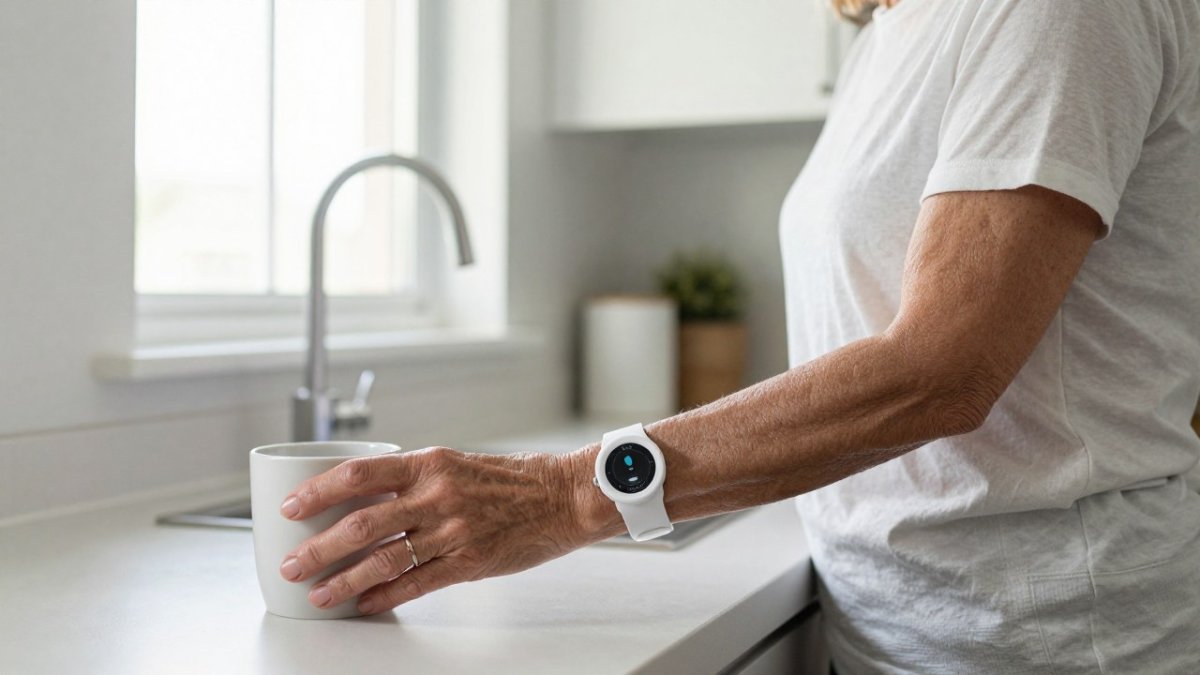
At home. A base unit with a sensitive microphone can often pick up a voice from an adjacent room, but walls, distance, and background noise reduce clarity. A wearable pendant removes the range question because the microphone is on the user.
In the shower. Water and steam are hard on electronics, so look for a device the manufacturer explicitly rates as water-resistant or waterproof for shower use. Even a rated device can sound muffled under running water, so the operator may rely on the account profile and location rather than clear speech.
Away from home. A mobile device with GPS and a cellular connection carries two-way audio with the user, so the call still reaches a monitoring center wherever the user is. Indoor coverage can drop in basements, elevators, and large buildings, so confirm the device uses a cellular network with broad coverage rather than a home landline.
Hearing and speech limitations. Speaker volume and microphone pickup matter most for users with hearing loss or slurred speech. Ask whether the device has adjustable volume and whether the operator is trained to work with users who have difficulty speaking.
Range and testing. Test the device from the rooms where the user spends the most time, including the bathroom and the bedroom. If the voice sounds faint or cuts out, the device is not giving the user a reliable two-way call in that spot.
What Happens When the User Cannot Speak
A two-way system is only as good as its plan for the call where nobody answers. This is the scenario most buyers never ask about, and it is where providers differ the most. A common pattern is a staged response: the operator speaks first, waits for a reply, repeats the attempt, and then escalates based on what the account allows.
Here is what a trained operator typically does when a call connects but the user is silent or only moaning:
- Speaks clearly and identifies the call. The operator announces who is calling and asks the user to respond or press the button again.
- Listens for background audio. A TV, a dog, a cry, a thud, or running water can tell the operator whether the user is home and what may have happened.
- Checks the account profile. The profile usually lists the user's address, medical conditions, medications, mobility limits, and emergency contacts. Operators read this while the line is open.
- Uses location data on mobile devices. A GPS-enabled pendant reports a location, so the operator can send help to that spot rather than only to the home address.
- Calls the user's phone or emergency contacts. Many centers try the home phone and the listed contacts in order before dispatching.
- Dispatches help when the situation is unclear. When there is no response and no contact confirms the user is safe, most centers treat the call as an emergency and send responders to the address on file.
Ask the provider two direct questions before you buy: What is your policy when the user cannot speak? and Do you dispatch on a silent call, or do you only notify family? A system that only texts a family member is not the same as one that sends help.
Pressing the SOS button for about three seconds starts a call to the pre-set SOS number on the device. Holding the power button for eight seconds in power-on mode resets the device, which is useful if it stops responding.
Choosing a Two-Way System: Questions to Ask Before You Buy
Start with the setting where the user spends the most time. A home base unit suits someone who rarely leaves the house. A wearable pendant or watch suits someone who goes out, and many people prefer a wrist device because it is more discreet.
Before you buy, ask these questions:
- Does the device work in the shower, and is that stated in writing?
- Is the cellular connection included, or does it carry extra charges?
- Does the monitoring center send help when the user cannot speak?
- What happens to the contract if the device does not suit the user?
At We Send Help, there are no long-term contracts, no activation fees, and no early cancelation fees. To cancel, you return the device. Monitoring is provided 24/7 by trained operators, and the monthly fee covers the cellular connection, use of the device and its warranty for repair or replacement.
Testing the device each month is one habit that keeps it ready. Many people assume that if they have not needed the button in a year, they do not need the service. Not pressing the button for a year simply means you are a year closer to needing it.
Learn more about your options with 7 Things to Check in a Medical Alert for Seniors Living Alone and Best Medical Alert Systems for 2026: What Actually Works.
The table below sums up the main questions to check before you choose a two-way system.
| Question | What to look for | Why it matters |
|---|---|---|
| Shower use | Written manufacturer rating for shower use | Water and steam can damage electronics |
| Connection | Cellular or landline, and whether it is included | Determines if the device works during outages |
| No-response policy | Operator dispatches help on a silent call | A system that only texts family is not the same as one that sends help |
| Contract terms | Cancelation and return conditions | Shows what happens if the device does not suit the user |
Frequently Asked Questions
Which medical alert systems have two-way communication?
Two-way communication appears on many home base consoles and some mobile and wearable devices, but the features differ by model. Look for built-in speakers and a microphone that let you talk directly to the monitoring center without picking up a phone. Ask the provider which models support two-way voice, whether the device works through a cellular connection or a landline, and how far the mobile unit reaches from the base. Confirm these details in writing before you order, because a device sold as two-way may only offer one-way listening in some settings.
Can I cancel a medical alert service without penalty?
Contract terms vary, so check them before you buy. At We Send Help, there are no long-term contracts, no activation fees, and no early cancelation fees. To cancel, you simply return the device. Look for the same terms from any provider you consider, and avoid services that require a long-term commitment or charge large fees to end service early.
Do two-way medical alert devices work outside the home?
Mobile and wearable devices with two-way voice are designed to work outside the home, but they depend on a cellular connection and battery charge. Test the device away from home before you rely on it, and confirm that it reaches the monitoring center from the places you go most often. Note that coverage and call quality can vary by location, so ask the provider how the device connects and what happens during a signal outage.