 blog
How to Choose Medical Alert Systems With GPS Tracking
Last Updated: November 10, 2026
Quick Summary
GPS tracking is the most important feature to check when choosing a medical alert system, because it sends your exact location to the monitoring center with every alert. Satellite signals provide the position, while cellular networks and Wi-Fi help refine it indoors. Accuracy varies with surroundings, so ask providers how their devices perform where you spend time.
- A GPS-enabled device sends your exact location to the monitoring center with each alert.
- GPS works through satellite signals, with cellular networks and Wi-Fi refining position indoors.
- Accuracy and coverage vary with your surroundings, so test them where you spend time.
- Look for waterproof design, two-way hands-free voice and fall detection in mobile devices.
- Confirm monthly cost, connectivity terms and cancellation policy before you book.
Table of Contents
- How GPS Tracking Works in a Medical Alert System
- Choosing a Mobile Device for Travel and Shower Safety
- Booking Your Medical Alert Device With We Send Help
- Frequently Asked Questions
How GPS Tracking Works in a Medical Alert System
A GPS-enabled medical alert device is only as useful as its location data, so GPS tracking is the feature to check first. When you press the help button, a GPS-enabled device sends its exact location to the monitoring center alongside the alert. That gives response specialists something concrete to work with when you can't describe where you are. (Source: FCC guidance on wireless emergency calling)
GPS works through satellite signals, while cellular networks and Wi-Fi help refine the position indoors. Coverage and accuracy vary with your surroundings, so ask any provider how its device performs in the places you actually spend time. For a deeper look at connectivity, the FCC guidance on wireless emergency calling explains how emergency calls are handled on wireless networks.
Choosing a Mobile Device for Travel and Shower Safety
Mobile protection matters most when you're away from home or at risk of a fall in the bathroom. Look for a waterproof design, two-way hands-free voice, and fall detection, since a device you can't wear in the shower or on a trip won't protect you. Waterproof smartwatches and 4G/5G-enabled consoles with GPS tracking and immediate 911 access with health information are among the options to consider.
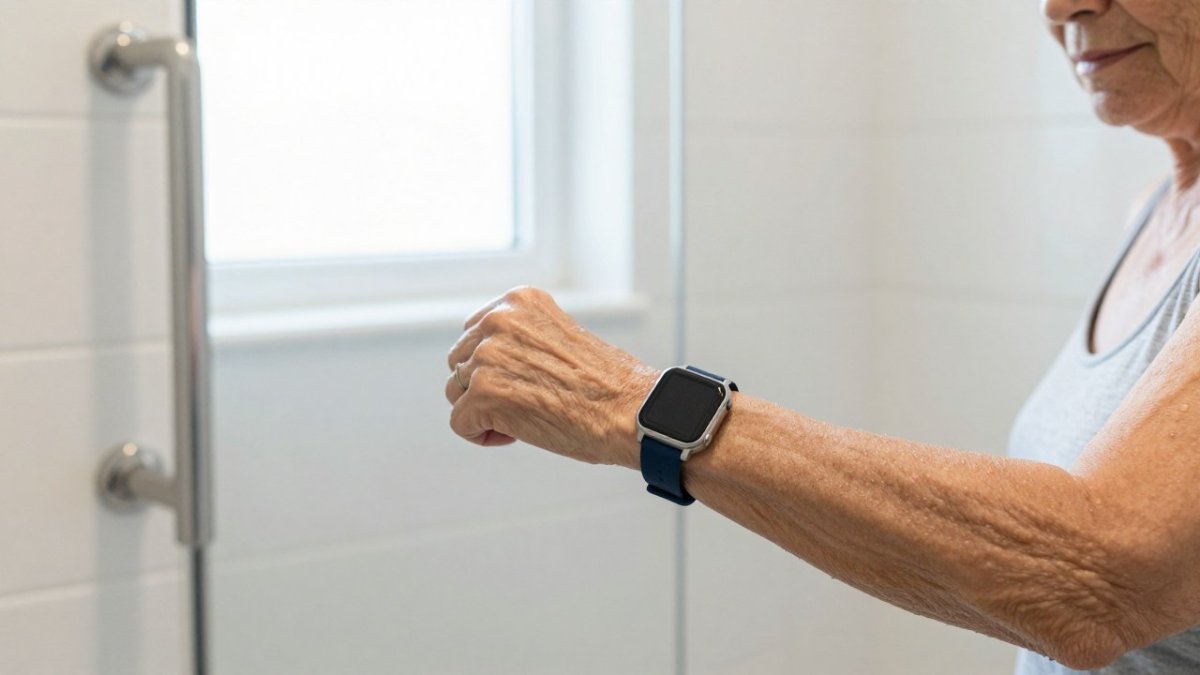
The article recommends checking these features when choosing a mobile device for travel and shower safety. (Source: Consumer Reports' analysis of medical alert systems)
| Feature | Why it matters | Note |
|---|---|---|
| Waterproof design | Usable in the shower | Needed for bathroom fall risk |
| Two-way hands-free voice | Talk to responders directly | Works without holding the device |
| Fall detection | Alerts when a fall occurs | Helps if you cannot press the button |
| GPS tracking | Shows your location while away | Essential for travel |
| 4G/5G connectivity | Works outside the home | Included at no extra charge with We Send Help |
Booking Your Medical Alert Device With We Send Help
Before you book, confirm the monthly cost, the connectivity terms and the cancellation policy. We Send Help has no long-term contracts, no hidden fees and no extra charge for 4G/5G LTE service. Visit the We Send Help website for current pricing and to place your order.
Frequently Asked Questions
Do medical alert systems with GPS tracking require a monthly fee?
Most GPS medical alert systems charge a monthly monitoring fee, and some also add a cellular data charge. Pricing depends on the plan, device and service level, so ask each provider for the full monthly cost before you commit. At We Send Help, there are no long-term contracts, no activation fees, no early cancelation fees and no extra charge for 4G/5G LTE service. For current prices or a quote, visit the We Send Help website.
Can a mobile medical alert system work outside the home?
Yes. A mobile medical alert device uses GPS and cellular connectivity so it can reach emergency monitoring when the wearer is away from home. Coverage depends on the cellular network and the device's GPS signal, so indoor and rural locations may be less precise than open outdoor areas. Check how the device connects and how it locates the wearer before you rely on it for travel.
Are GPS medical alert devices waterproof?
Some are. Waterproof designs, including certain smartwatches, are built to be worn in the shower, which is where many falls happen. Look for a stated water-resistance rating and confirm it covers showering and bathing. At We Send Help, the devices include a waterproof design for shower safety.